Showing posts with label tai chi for rehab. Show all posts

November 12, 2017

Never Too Late to Start Exercise


"It’s never too late to start working out, says Justin Mullner, a D.C. sports medicine doctor. “You can see dramatic benefits from exercising in older adults,” Mullner says. These benefits include prevention of osteoporosis and muscle loss, as well as improved blood pressure and blood-glucose levels.
Government guidelines suggest adults over 65 should get at least two and a half hours of moderate exercise per week (brisk walking, for example) and do muscle-strengthening activities that work all major muscle groups twice a week."

Read the full article in the Washington Post.

September 29, 2016

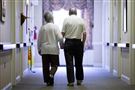
agingwalking0928 "It’s not too late to get moving: Simple physical activity — mostly walking — helped high-risk seniors stay mobile after disability-inducing ailments even if, at 70 and beyond, they’d long been couch potatoes." Read the whole article at the Post Gazette.

September 25, 2015

Tai Chi for Fall Prevention, Even in Harsh Climates"

"Minnesota has the nation’s fourth-highest rate of fall-related deaths," the Minneapolis Star-Tribune reported in a recent article about how Tai Chi can prevent falls. Many studies have shown that Tai Chi helps improves many aspects of health, mobility, and balance. State commissioners of health and human services are seen here, following along in a training workshop.

Tai Chi participants can note a dramatic and quick improvement in balance and mobility by practicing even just the basics. Tai Chi is very multi-faceted, and can serve as a mindfulness exercise, as well as a martial art.

November 8, 2011

Tai Chi for the Blind

A troupe of people with visual impairment performed this September as part of Beijing's National Day celebrations. The team members were massage students from the Zhangcheng School for the Blind, and had only been practicing tai chi for three months. (Xinhua, September, 2011)
Wan Zhouying, the instructor, reported that his teaching techniques needed to be adapted for the team. "Sometimes, Wan could not explain some specific actions or poses by words then he would ask students to touch him. However, even those students imitated him by touching, Wan still had to correct their actions one by one." The students derived health, confidence, and betterment of massage skills.